There are losses that divide your life into two parts.
There is everything that came before, and then there is everything that came after.
Losing Dawne was that kind of loss for me.
For a long time, I thought grief was something I was supposed to survive, overcome, or somehow leave behind. I thought healing meant reaching a point where the pain no longer had any power over me.
I eventually learned that grief does not work that way.
At least it did not for me.
There was no straight line through it
Grief did not move in an orderly direction.
There was no clean progression from shock to sadness to acceptance, followed by some final moment when everything suddenly made sense.
It moved forward and backward.
Some days I could talk about Dawne and smile.
Other days, something small could bring everything back with a force that felt completely out of proportion to the moment.
A memory.
A place.
A photograph.
A song.
A quiet room.
Grief could arrive without asking permission.
For a while, I resisted that.
I wanted control over something that could not be controlled.
I eventually learned that grief was not the enemy. It was evidence that someone had mattered deeply.
I had to stop judging myself for grieving
One of the hardest lessons was learning to stop judging the way I grieved.
There is a strange pressure that can develop after a major loss.
At first, people understand that you are hurting.
Then time passes.
The world continues moving.
People return to their routines.
And somewhere along the way, you can begin wondering whether you are supposed to be further along than you are.
I had to let go of that idea.
There was no correct timetable for missing Dawne.
There was no date on a calendar when I was required to stop feeling the absence.
I had loved her in my own way, and I was going to grieve her in my own way too.
Healing did not mean forgetting
This became one of the most important distinctions for me.
I did not want healing to mean erasing Dawne from my life.
I did not want peace to require me to stop talking about her, stop remembering her, or pretend that losing her had become insignificant.
That never felt right.
What I slowly came to understand was that healing could mean something else.
It could mean remembering without being destroyed by the memory every time.
It could mean allowing love and sadness to exist together.
It could mean being grateful for what we had even while wishing desperately that we had been given more time.
It could mean continuing to live without treating that continuation as a betrayal.
There is a difference between being okay and being at peace
I do not describe Dawne's death as something I am okay with.
I am not.
There are things in life that never become okay simply because enough time passes.
But I have learned that it is possible to reach a place of peace without calling the loss acceptable.
That distinction matters to me.
Peace does not mean I wanted this outcome.
Peace does not mean I would not change it if I could.
Peace means I eventually stopped fighting reality every minute of every day.
I learned to carry what happened instead of spending all of my strength trying to make it unhappen.
Then my own body changed
Grief was not the only major challenge I would eventually have to face.
I also suffered a stroke.
That introduced a different kind of loss into my life.
There were physical changes.
There were things that no longer worked exactly as they once had.
There were changes in memory, movement, vision, strength, and the ordinary routines I had taken for granted.
Suddenly I was not only processing the absence of someone I loved.
I was also learning how to live inside a body and mind that had been changed by a neurological event.
Grief and recovery began occupying the same space
The stroke did not politely wait for grief to finish.
Life rarely organizes its difficulties one at a time.
I found myself dealing with more than one kind of recovery at once.
There was emotional recovery from losing Dawne.
There was neurological and physical recovery from the stroke.
And there was the challenge of figuring out who I was becoming after both.
Some memories felt close.
Others felt distant or incomplete.
My body required patience.
My mind required patience.
Grief required patience.
I was learning the same lesson in several different languages.
I could not force my way through either one
I have always understood effort.
Work harder.
Push forward.
Keep going.
Those instincts can be useful.
But grief taught me that not every problem responds to force.
The stroke taught me something similar.
You can work hard in recovery, but you cannot simply order the nervous system to heal faster.
You can want a memory to return, but wanting is not the same thing as recovering it.
You can desperately want grief to be finished, but grief does not take instructions.
Sometimes the harder task is allowing.
Allow the sadness.
Allow the frustration.
Allow the fatigue.
Allow the good day without feeling guilty about it.
Allow yourself to laugh again.
Allow yourself to miss someone and still participate in your own life.
I had to give myself permission to heal
That phrase sounds simple.
It was not simple for me.
There can be guilt attached to healing after losing someone you love.
If I have a good day, does that mean I am forgetting?
If I laugh, does that mean I am moving on?
If life becomes meaningful again, does that somehow make what happened less important?
I eventually realized the answer was no.
Healing did not diminish Dawne.
Living did not erase her.
Finding moments of happiness did not cancel the love that came before them.
I had to allow myself to live because I was still here.
Grief changed shape
The grief I live with now is not identical to the grief I experienced at the beginning.
That does not mean it disappeared.
It changed.
In the beginning, grief could feel like the entire landscape.
There was nowhere to stand that was not inside it.
Over time, the landscape grew larger.
The grief was still there, but other things began appearing beside it.
Recovery.
Friendship.
Work.
Faith.
Humor.
Purpose.
New memories.
Hope.
The grief did not have to disappear for life to become larger than the grief.
I stopped looking for closure
I do not think much about closure anymore.
The word sounds too final for something as complicated as love and loss.
Dawne was part of my life.
Her absence is now part of my life too.
I do not need to close a door on either one.
What I needed was integration.
I needed to find a way for the love, the memories, the pain, and the life I still had in front of me to exist in the same story.
That took time.
The stroke made me think differently about time
A stroke has a way of making the fragility of life very difficult to ignore.
One moment you believe you understand your own body and your own mind.
Then something happens that changes the assumptions underneath you.
Going through that after losing Dawne made time feel more valuable to me.
Not in a dramatic, inspirational-poster kind of way.
In a practical way.
People matter now.
Conversations matter now.
A walk matters now.
A quiet evening matters now.
Telling someone you love them matters now.
There is no guarantee that life will wait until we are ready to appreciate it.
Peace came slowly
I cannot point to one morning when I woke up and announced that I had found peace.
It accumulated gradually.
It came through acceptance.
It came through exhaustion.
It came through faith.
It came through allowing myself to remember without always trying to change the ending.
It came through learning that I could still have a future without betraying my past.
It came through surviving things I was not certain I could survive.
And eventually I noticed that the pain and I were no longer fighting each other every minute.
That was different.
That felt like peace.
Peace does not erase sadness
I can be at peace and still miss Dawne.
I can be grateful and still wish she were here.
I can smile at a memory and still feel the sadness underneath it.
Those things no longer seem contradictory to me.
They are simply what it means to have loved someone who is no longer physically present.
I did not find peace by leaving Dawne behind. I found it by learning how to carry her differently.
Even the stroke became part of the lesson
I would never have chosen the stroke.
I would never have chosen the deficits that remained afterward.
But the experience reinforced something grief had already begun teaching me.
Life after loss is not necessarily about returning to exactly who you were before.
Sometimes there is no going back.
Sometimes the work is learning how to move forward as the person you are now.
That can be difficult to accept.
It can also be freeing.
I stopped demanding that recovery return every part of my old life before I allowed myself to value the life I still had.
I learned to make room for both grief and gratitude
For years, I thought grief and gratitude were opposites.
Now I think they often sit beside each other.
I grieve because I lost Dawne.
I am grateful because I had Dawne.
Both statements are true.
The loss does not cancel the love.
The love does not remove the loss.
They belong together.
What healing means to me now
Healing is not forgetting.
It is not pretending.
It is not telling yourself that something terrible was actually fine.
It is not racing toward some imaginary finish line where grief is no longer allowed.
For me, healing became the ability to live with the truth of what happened without letting that truth consume every remaining part of my life.
It became accepting that I could still love Dawne and continue living.
It became understanding that peace and grief could occupy the same heart.
It became forgiving myself for surviving.
It became allowing myself to heal.
The photograph
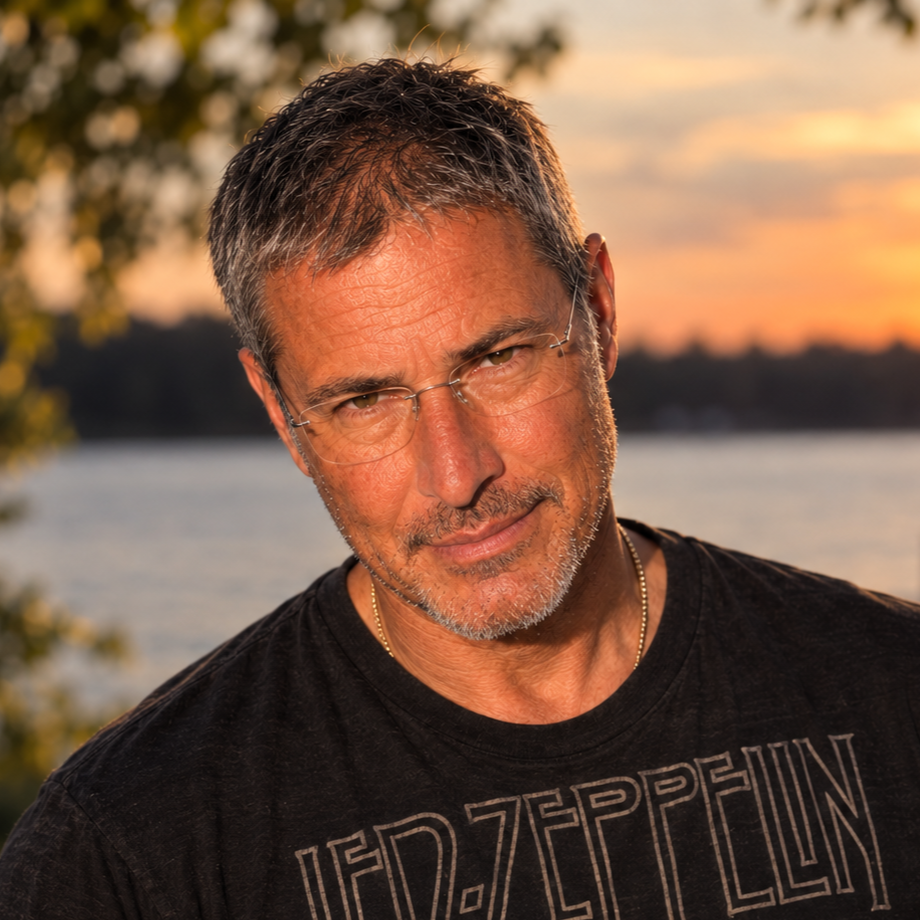
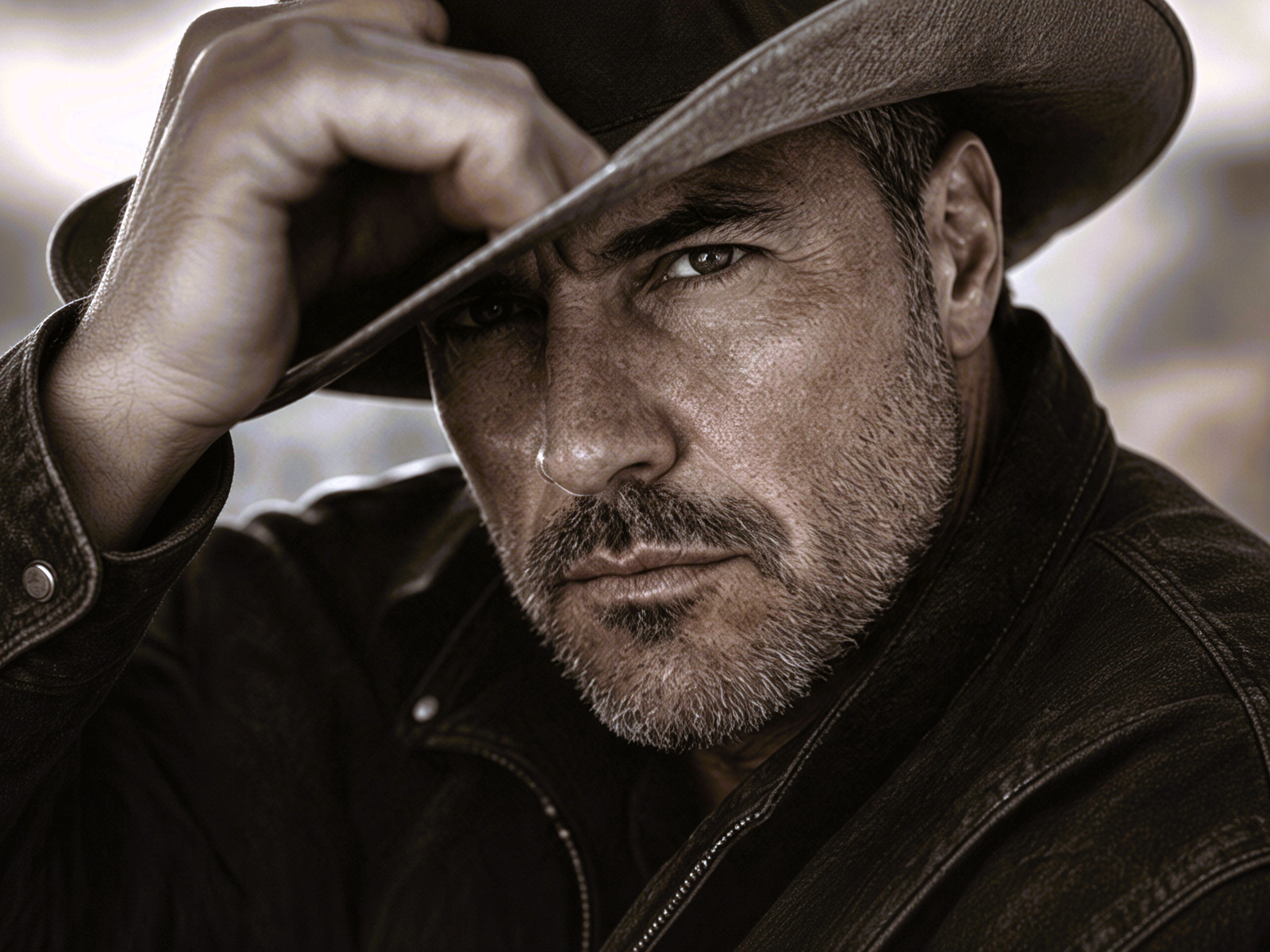
I chose this portrait because there is something reflective about it.
It is quiet.
There is no attempt to make grief look dramatic.
That feels appropriate to me now.
The hardest parts of grief were not always loud.
Many of them happened internally, in ordinary rooms, on ordinary days, while the rest of the world continued around me.
The same is true of healing.
Much of it happens where nobody can see it.
A thought changes.
A memory hurts a little less.
You stop blaming yourself for having a good day.
You notice that you are planning something in the future.
You laugh without immediately questioning whether you should.
Those moments are easy to miss.
But they are healing.
My journey continues
I do not think of grief as a journey with a final destination anymore.
It is part of my story.
So is Dawne.
So is the stroke.
So is recovery.
So is the peace I eventually found.
I have learned that I do not need to choose between remembering the past and participating in the present.
I can do both.
I can miss her and still smile.
I can carry sadness and still be hopeful.
I can acknowledge everything that has been lost and still recognize everything that remains.
That is where I am now.
Not untouched.
Not unchanged.
Not pretending.
But at peace.
And after everything, peace is enough.